Self-driving and rider (Lidar)
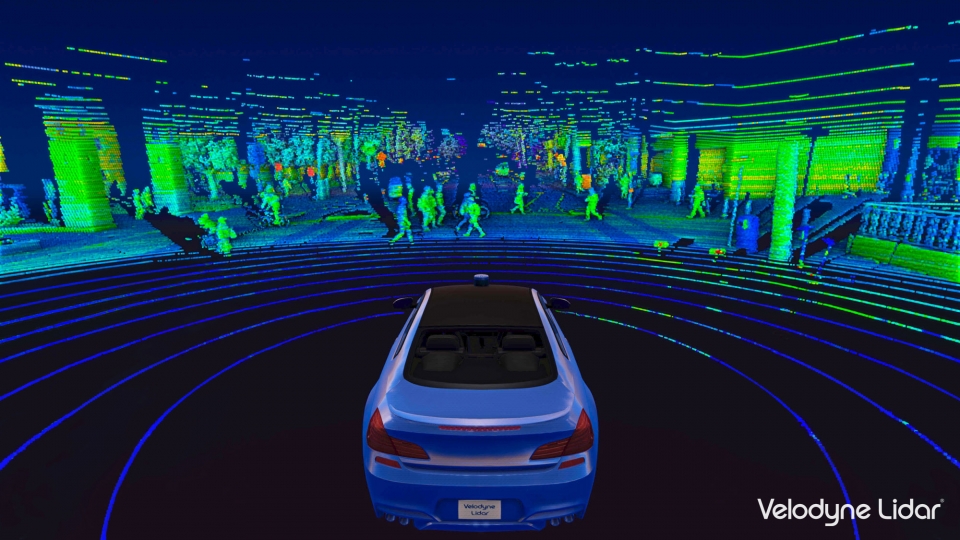
Most self-driving companies except Tesla use riders. In addition, various sensors such as cameras and radars and HD maps are used together. Riders and precision maps are preferred by traditional car manufacturers with relatively higher safety requirements because they provide 1-inch accuracy and data. New electric vehicle startups have no choice but to prefer riders because they have a lot of difficulties in collecting data. These companies first develop technology using riders because it is difficult to collect actual driving data until many self-driving cars are sold. After starting the self-driving service, a strategy for constructing a data circulation structure is selected. Of course, the cost and time of building and maintaining a precise map are large.
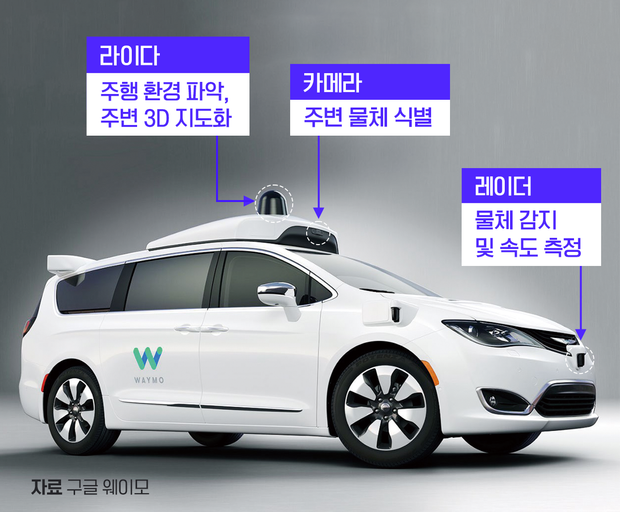
What is a rider sensor?
인기글

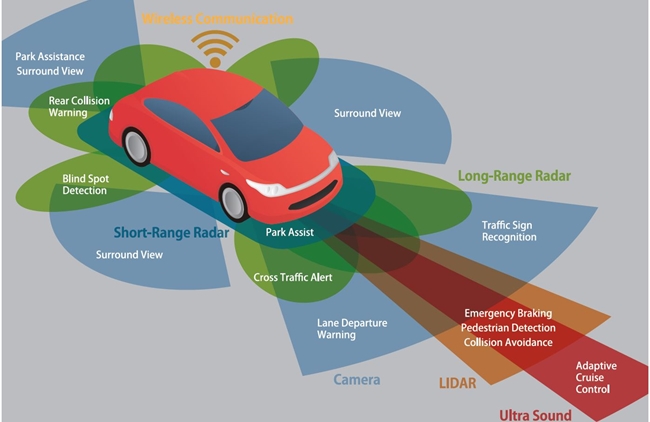
Ryder is a sensor developed for use in past aircraft and has high accuracy based on sophisticated spatial resolution.If radar uses radio waves to measure distance and shape from objects, riders use laser beams despite similar principles. Arrival time of the laser pulse is measured to calculate spatial position coordinates at a reflection point. Because the time when the laser beam is reflected varies depending on the characteristics of the target object, three-dimensional information above the shape of the object can be extracted.
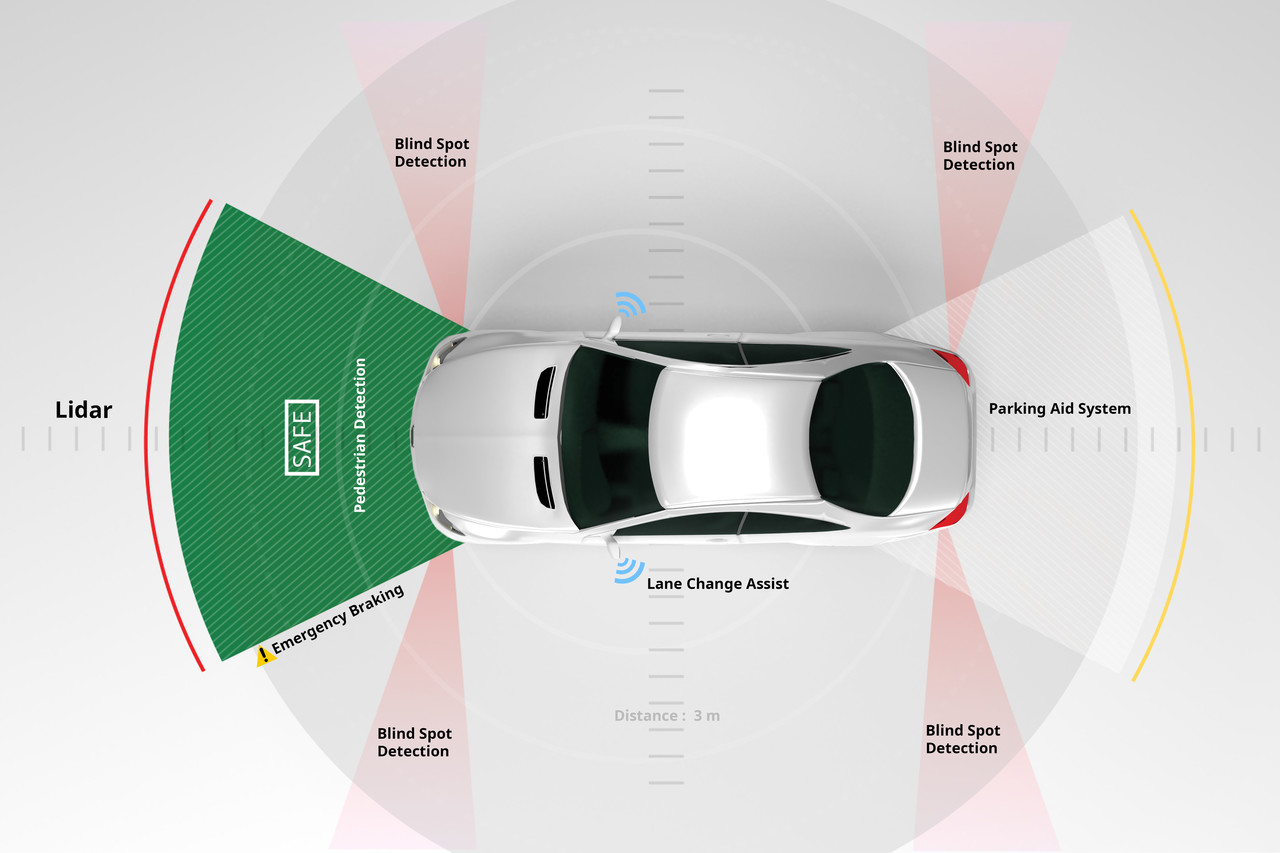
classification of rider sensors

Riders rotate the laser dozens of times per second at 360 degrees to monitor and image all directions, which are classified as mechanical riders and stationary riders. – Mechanical Rider: A method of controlling the direction of a laser by changing the direction of a mirror with a tilting motor and a rotating motor. It has the advantage of securing a 360-degree view. However, it is not only complicated in configuration but also sensitive to vibration due to high power consumption. – Fixed riders: evaluated in a manner suitable for application to vehicles. Electronic rotation reduces the field of view, but it is cheaper and smaller in size because there are no mechanical parts such as motors.

A laser used to use light is applied to a vehicle and transmits the vehicle to a vehicle and transmits this light to the array method and transmits this light. 905 nm bandwidth has played a large role in mass production and cost savings, but many noise phenomenon may be damaged. This safety issues began to apply to 50 nm bandwidth in the car industry. 1550 nm bandwidth damage is relatively relatively low noise phenomenon. However, the cost of power consumption is high and the power consumption of power consumption. It is not completed and the standard is not completed, so many companies are developing in the technology development. Future of Rider sensor

Many companies prefer riders because it is easy as a first step toward entering the data cycle structure. The key point of the autonomous driving system based on rider sensors is to identify the location of the vehicle and predict the route by contrasting it with a recognized peripheral image and a precise map.
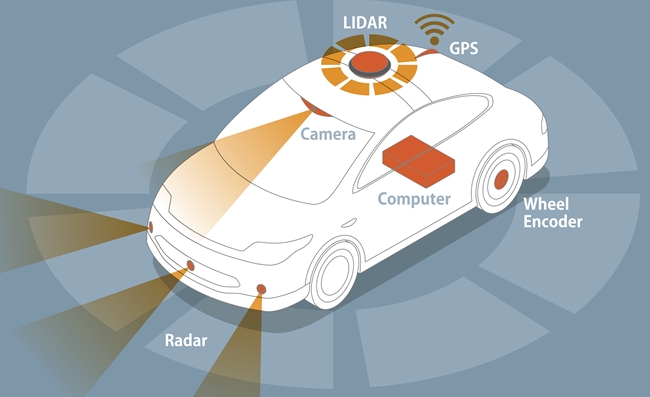
Many companies prefer riders because it is easy as a first step toward entering the data cycle structure. The key point of the autonomous driving system based on rider sensors is to identify the location of the vehicle and predict the route by contrasting it with a recognized peripheral image and a precise map.

레이더(Radar), 라이다(Lidar), 카메라(Camera)의 장단점 비교, 센서 퓨전(Sensor Fusion)이란?Automotive Sensor Radar, Rider, Camera 행율자A, ADAS (Advanced Driving Assistance Sys… blog.naver.com

레이더(Radar), 라이다(Lidar), 카메라(Camera)의 장단점 비교, 센서 퓨전(Sensor Fusion)이란?Automotive Sensor Radar, Rider, Camera 행율자A, ADAS (Advanced Driving Assistance Sys… blog.naver.com

